Pavers or poured concrete for your patio?
Concrete costs less up front; pavers flex, repair easily and look better longer. How to choose the right patio for your yard and budget.
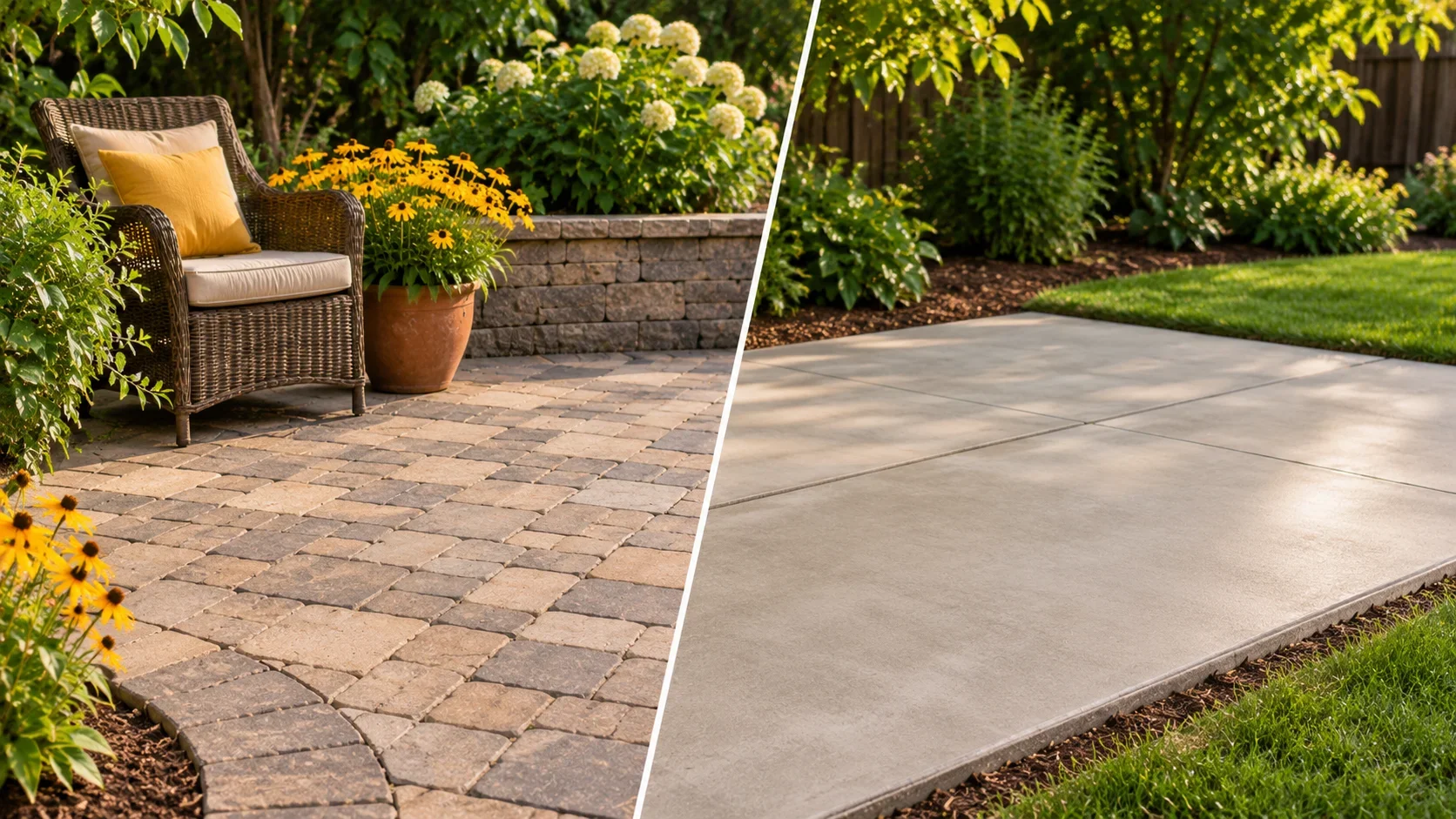
Poured concrete usually costs less to install, but it cracks as the ground moves, and a cracked slab is hard to repair invisibly.
The case for poured concrete
Concrete is simple, quick and usually the least expensive way to get a flat, hard surface behind the house. A crew sets the forms, pours, smooths and finishes it, and within days you have a patio. It can be stamped or tinted to look fancier, and for a small, simple space it's a perfectly reasonable choice.
The catch is that concrete is one big, rigid piece. When the ground underneath freezes, thaws, settles or swells, the slab can't flex, so it cracks. Control joints help the cracks happen in tidy places, but they still happen. And a patched crack almost never matches the color around it, so the repair stays visible for the life of the patio.
The case for pavers
Pavers cost more up front, flex with the ground and can be lifted and reset if something settles. Because the patio is made of hundreds of individual pieces, small movements in the ground spread out across the joints instead of breaking anything.
If a section sinks or a tree root pushes one up, a crew can pull those pavers, fix the base and put the same pavers back. No patch, no mismatched color. Pavers also come in more shapes, colors and patterns than concrete, which makes it easier to match the house or tie in a walkway.
Questions to help you choose
A few questions usually settle it:
- What's the budget today? Concrete wins on initial cost.
- How long are you staying? Pavers tend to pay off over a longer stretch.
- Do your winters freeze hard? Freeze and thaw cycles are tough on rigid slabs.
- Will you ever need to dig underneath? Pavers come up and go back; concrete gets cut.
- How much does the look matter? Pavers give you more patterns and colors to work with.
The part nobody sees
Either way, the base underneath decides how long it lasts. A patio is only as good as the ground it sits on. That means digging out soft soil, laying a thick layer of crushed stone, compacting it in stages and grading it so water runs away from the house.
It's the unglamorous part of the job, and it's the first corner cheaper installers cut, because nobody can see it on day one. They see it in year three, when the patio starts tilting toward the back door.
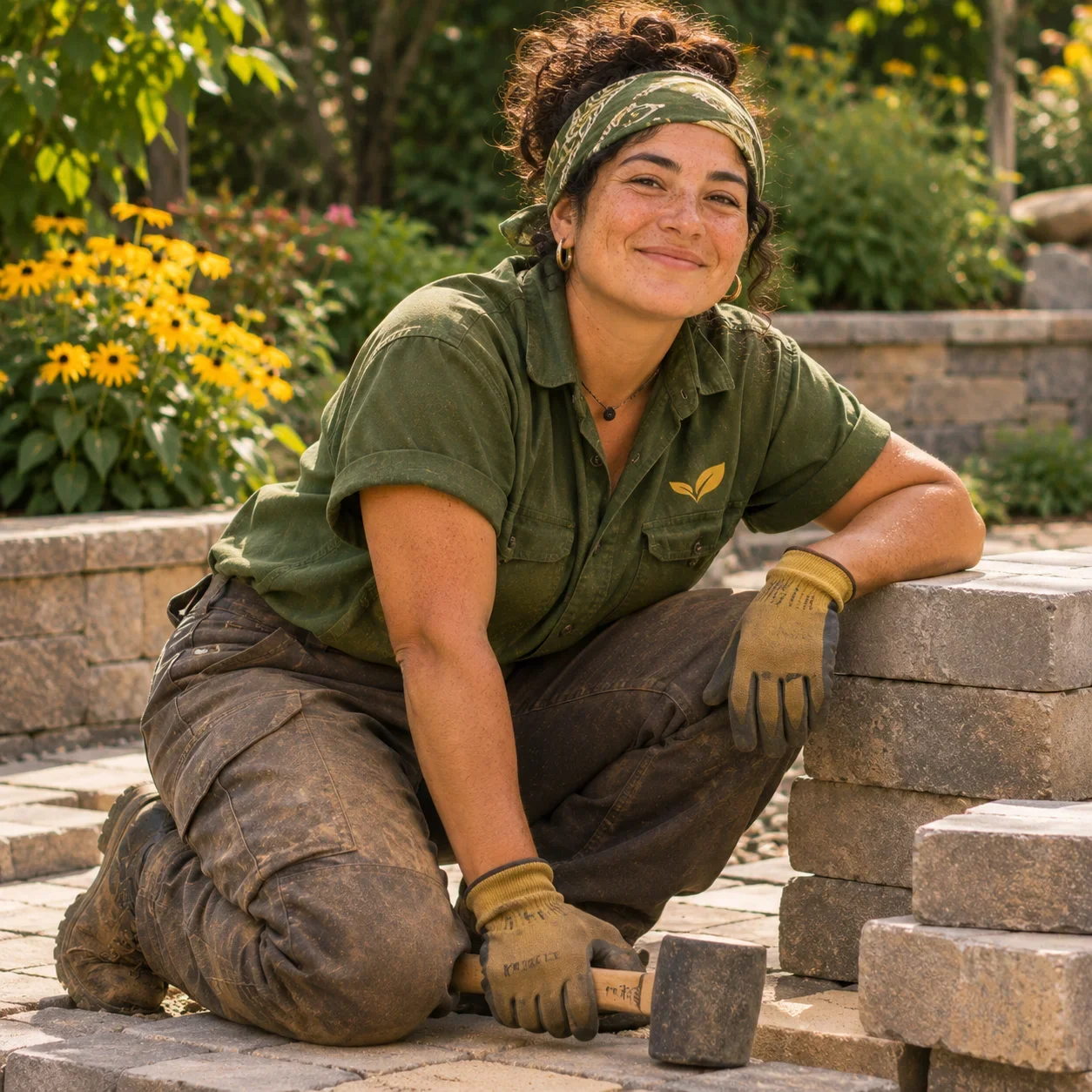
Rocky is fussy about the base for exactly that reason. He's also entirely fictional, and so is Loam Improvement Landscaping, but his patios are perfectly level. At least one imaginary marble has confirmed it.
Post Details
Rocky has laid more imaginary patios than anyone in the state and will tell you, at length, why the base matters most.
October 12, 2026
Browse Categories