When to aerate your lawn (and why it matters)

Cool-season grass loves a fall aeration. A quick guide to timing, what it does and how to tell if your lawn needs it.
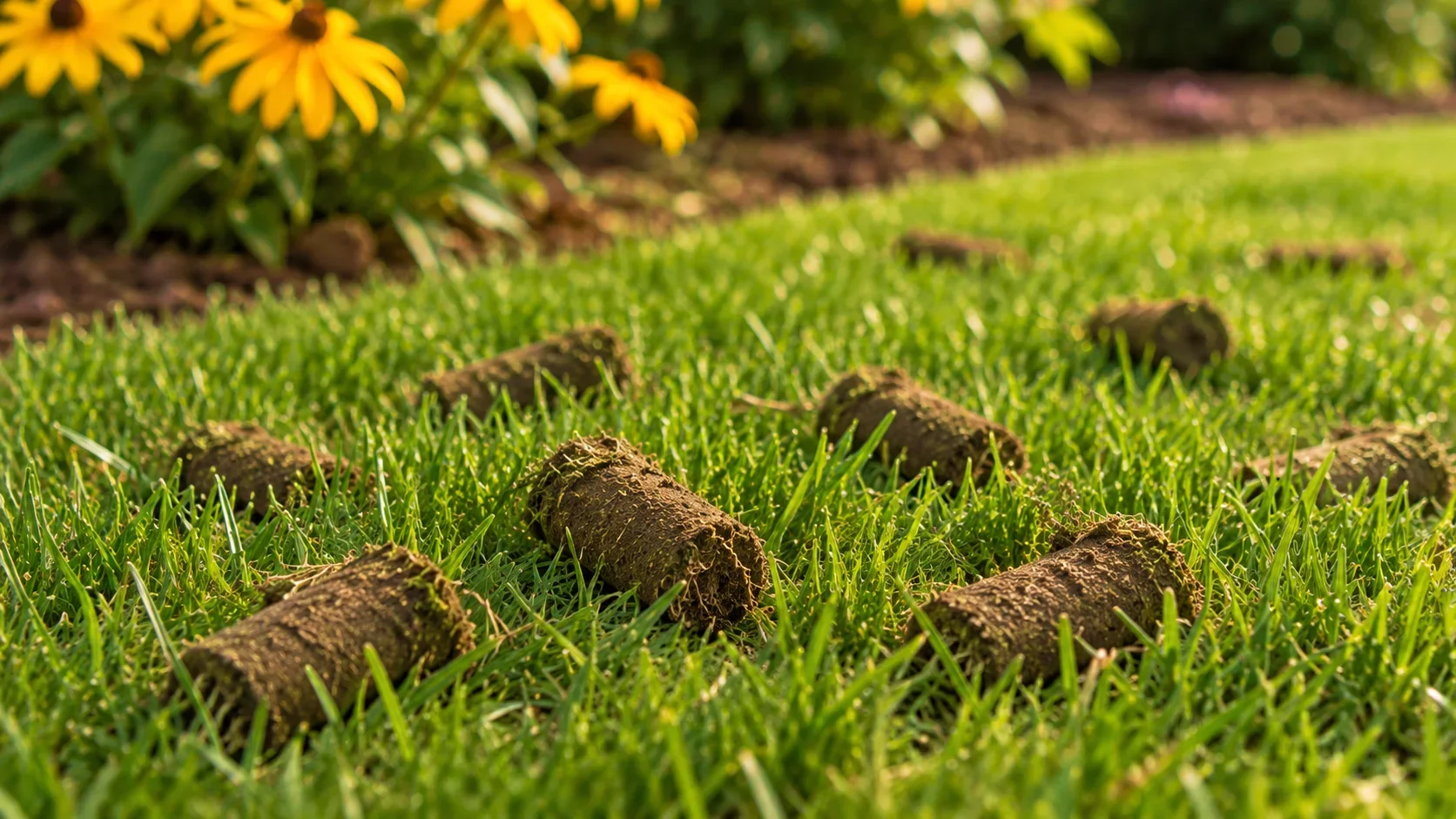
Aeration pulls small plugs of soil from the lawn so air, water and fertilizer can reach the roots.
What aeration actually does
Over time, soil gets packed down. Kids play on it, mowers roll over it, rain pounds it and the dog has a favorite path along the fence. Compacted soil squeezes out the tiny air pockets roots need, so water runs off instead of soaking in and grass roots stay shallow.
A core aerator fixes that by pulling out thousands of small plugs, each about the size of a finger. The holes let air, water and fertilizer reach the roots, and the soil around them loosens over the following weeks. The plugs left on the lawn look a little odd for a few days, then break down and disappear back into the grass. Leave them. They're doing their job.
When to do it
For cool-season grasses, early fall is the best time: the soil is warm, the air is cool and the grass has time to recover before winter. Spring works in a pinch, but it gives weeds a head start, and summer heat is hard on a freshly aerated lawn.
Warm-season grasses are the opposite. They prefer late spring or early summer, when they're growing fastest. If you're not sure which kind of grass you have, a landscaper can tell you in about four seconds, usually while pretending it took longer.
Signs your lawn needs it
If water pools after rain or a screwdriver is hard to push into the soil, it's time. A few other clues:
- Thin or patchy grass that doesn't improve with watering
- A spongy layer of dead stems and roots more than about half an inch thick
- Heavy foot traffic, like a play area or the well-worn route to the grill
- Clay soil, which packs down more easily than sandy soil
- A lawn that was laid on top of construction fill
Most lawns do well with aeration once a year. Heavily used lawns or clay soil may want it twice.
Making the most of it
Aeration is the perfect moment to overseed. The seed drops into the holes, finds loose soil and good contact, and fills in thin spots far better than seed scattered on hard ground. Water lightly and often for the next couple of weeks, and hold off on heavy weed treatments until the new grass is established.
Mow a little higher than usual afterward, too. Taller grass shades the soil, holds moisture and gives the new seedlings a fighting chance.
Moe has aerated more imaginary lawns than anyone in the business, mostly because Loam Improvement Landscaping is fictional. The advice works on real grass, though, and your lawn will thank you next spring.
Post Details
Moe started Loam Improvement with a single push mower he has never actually used. He still checks every estimate himself.
September 22, 2026
Browse Categories